什么决定了 PV 接线盒装配线的节拍时间?
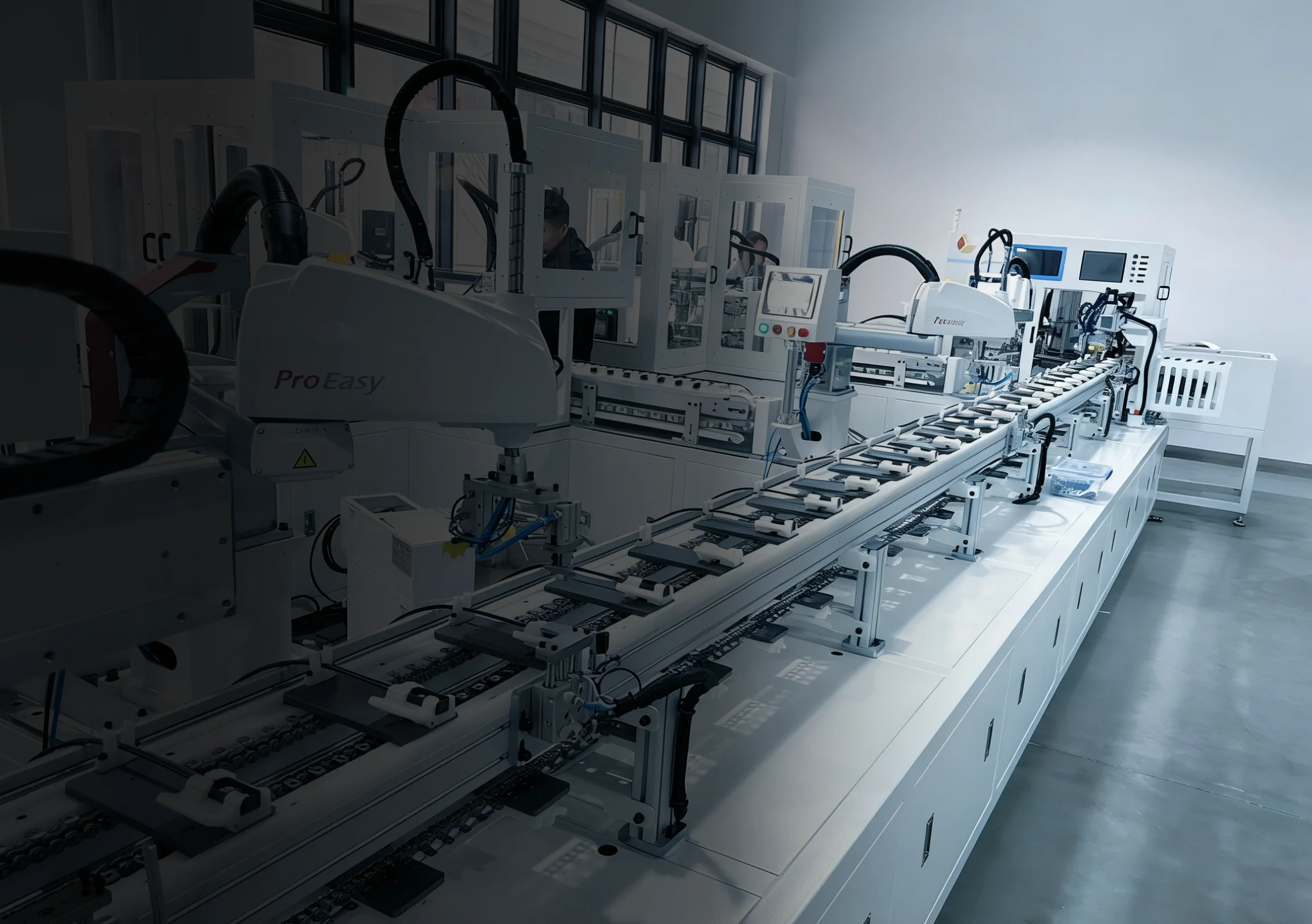
节拍时间不仅取决于最快的设备工位。上料稳定性、线缆预处理、铆接、点胶准备、测试、下料与缓冲逻辑都会影响真实产出。
- 瓶颈工位如何决定产线节奏
- 为什么稳定上料比峰值速度更重要
- 产线平衡如何影响日常产出
面向生产管理者、工艺工程师与自动化团队的实用工程文章,帮助评估 PV 接线盒、连接器与太阳能线缆生产线。
按生产挑战浏览文章:节拍时间、质量检测、产出稳定性、运动精度、连接流程与工厂表现。
节拍时间不仅取决于最快的设备工位。上料稳定性、线缆预处理、铆接、点胶准备、测试、下料与缓冲逻辑都会影响真实产出。
稳定生产依赖于一致的物料供给、耐用的治具、清晰的故障恢复逻辑以及便于维护的工位设计。
Riveting and resistance welding both support electrical connection processes, but they differ in cycle time, consumables, fixture requirements, maintenance and quality control strategy.
Resistance welding joins conductive parts by applying current and pressure at the contact area. Riveting forms a mechanical joint by deforming a rivet, terminal or conductive feature under controlled force. The selection depends on product structure, material stack, accessible joining area and inspection method.
In resistance welding, heat is generated at the electrical contact area when current passes through the joint under pressure. In riveting, the joint is created by plastic deformation that clamps or locks the conductive parts together. The process window must match the material, terminal shape and junction box conductive structure.
Soldering depends on wetting, heat transfer and surface cleanliness. A stable solder joint is not only about adding enough solder; the conductive part, cable terminal and solder must reach a temperature window where the solder can flow across the metal surface instead of forming a bead or cold joint.
Contact resistance is affected by real contact area, surface condition, joining pressure and material conductivity. Even when two metal parts look fully touching, the actual electrical contact happens through microscopic high points. If the joint pressure is low or the surface is contaminated, current flows through fewer points and local heating can increase.
Contact area and pressure must be balanced. A larger apparent contact area is not useful if the parts are not pressed together consistently. In resistance welding, pressure affects heat generation and material contact. In riveting, deformation height and clamping force determine whether the conductive parts stay locked without excessive damage.
CCD 检测可在不良品进入最终包装前识别缺件、位置错误、极性错误、表面缺陷与装配偏差。
Servo systems influence insertion accuracy, pressing force, positioning repeatability and long-term machine stability, especially for connector and terminal assembly.
OEE helps production teams understand whether output loss comes from downtime, slow running or quality issues, making it easier to prioritize improvement work.