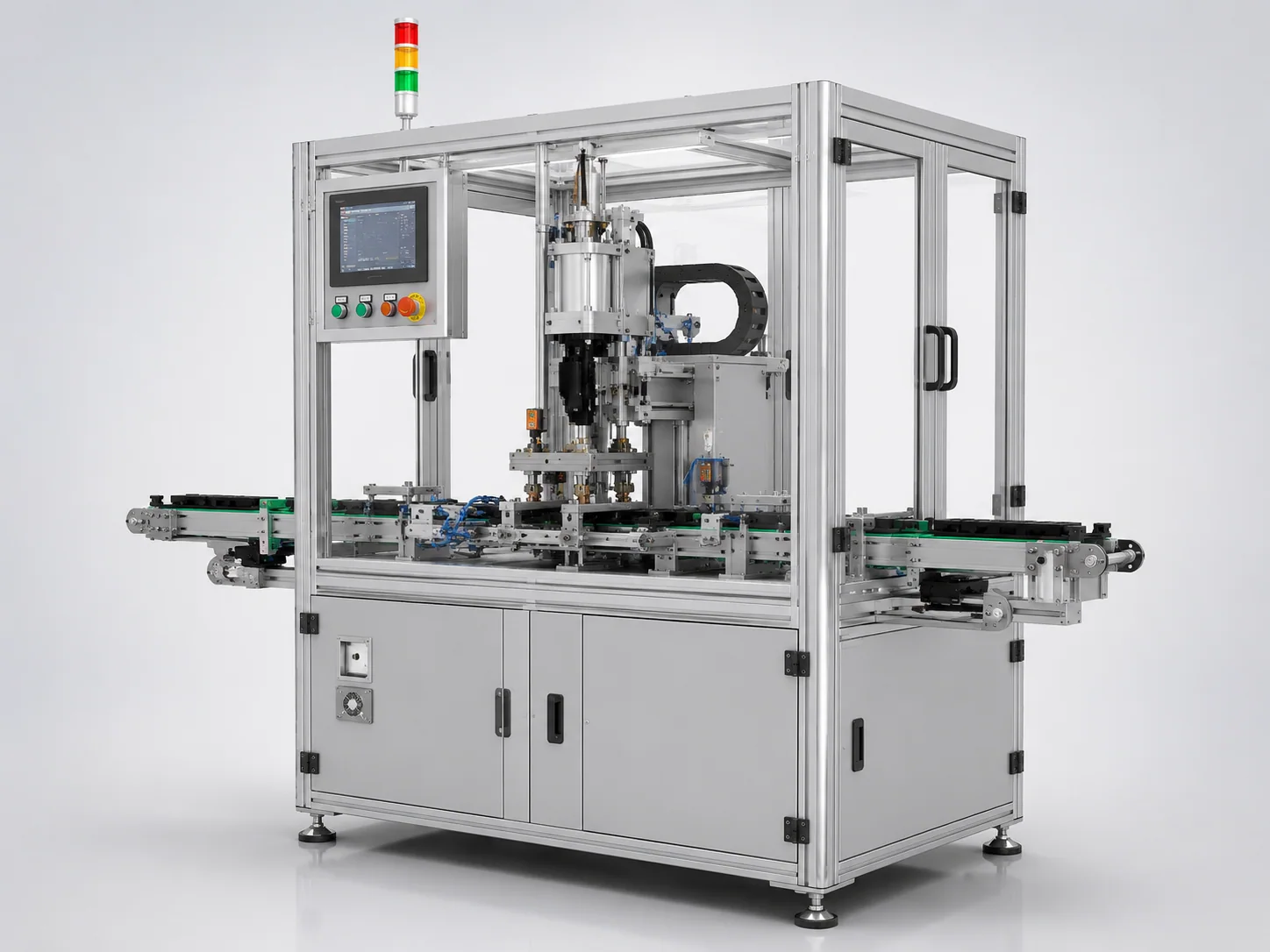
PV SNAP FASTENING AUTOMATION

Automatic Snap
Fastening Machine

Automated fastening of finished junction boxes with stable snap-fit hook installation and high repeatability.

Built as a standalone unit or an integrated station in full assembly lines, supporting both long and short hook variants with consistent fastening quality.

1200-1300 pcs / hour target output
L2100 overall line length
0 operator configured
5KW installed line power
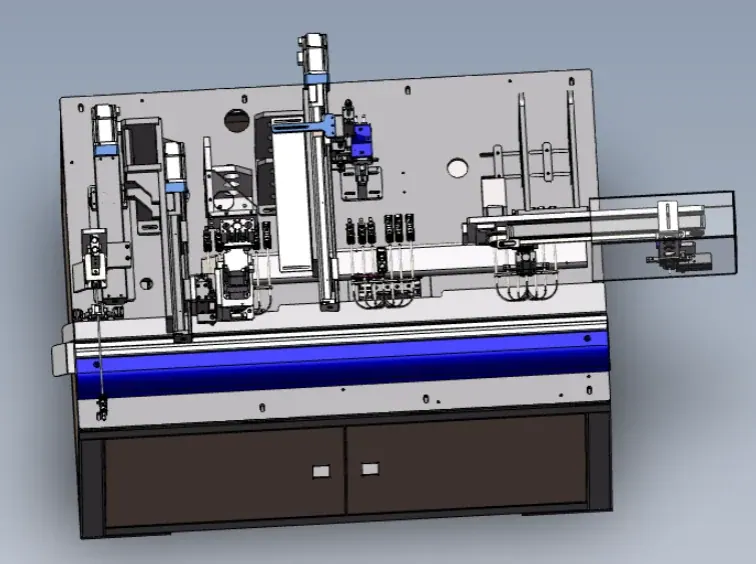
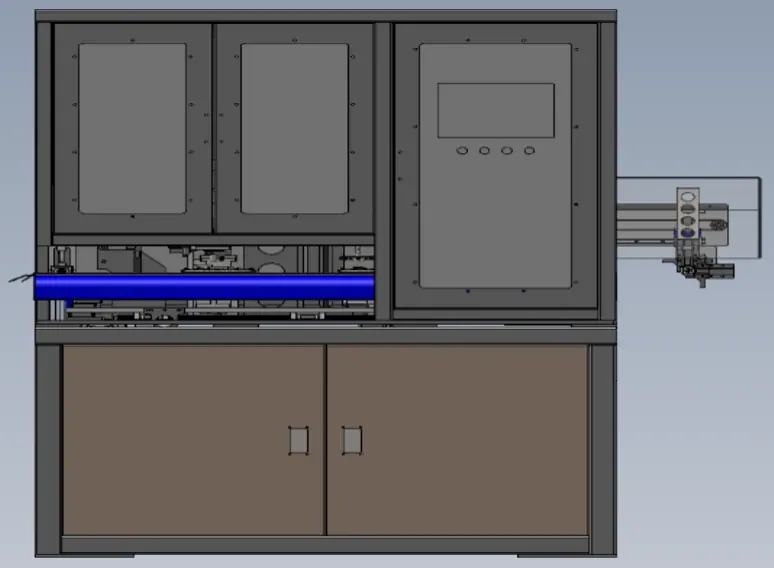
Automatic snap fastening machine
COMPONENTS & MATERIALS

Components Handled in Each Assembly Cycle

Key components processed by the snap fastening station — from snap hook feed through to finished PV junction box discharge.

System Configuration

Standalone or In-Line Snap-Fit Cell

Servo-driven snap-fit fastening for finished PV junction boxes. Conveyor interface for in-line integration; no mechanical retooling required between long and short hook variants.

Key Components
Snap Hook

Supports long and short snap hook variants supplied as pre-fabricated workpieces.

PV Cable

Processes pre-routed PV cables assembled into junction box bodies upstream.

Crimped Terminal

Compatible with pre-crimped terminals supplied from upstream assembly processes.

Connector Housing

Supports standard junction box connector housings in single and dual-cable configurations.

Finished Junction Box

Outputs completed junction box assemblies with snap hooks installed and ready for electrical testing.

ENGINEERING DESIGN

Design Rationale and Deployment Context

Engineering decisions behind the machine architecture and the production environments where it performs best.

Engineering Advantages

01
Geometry-Based Variants

No tooling changeover between long and short hooks; supports mixed production without downtime.

02
In-Process Verification

Quality verified via servo feedback during snap engagement; eliminates downstream visual inspection.

03
Active Cable Arranging

Built-in station eliminates manual positioning fixtures and pre-alignment jigs.

04
Self-Contained Design

All systems integrated; no external control cabinet or auxiliary equipment required.

05
Automated Cycle Logic

Built-in part detection and status checks enable unattended operation without quality gates.

Ideal Production Scenarios

A
Module OEMs

In-house junction box assembly with high volume and zero operators.

B
EMS Subcontractors

Final fastening step in cable assembly lines supplying to module manufacturers.

C
Multi-Model Lines

Process multiple hook variants without mechanical retooling or changeovers.

D
Manual-to-Auto Transition

Standalone first automation without redesigning surrounding production layout.

E
Full Assembly Lines

Terminal fastening station before electrical testing and packing via conveyor.

INTERACTIVE PROCESS FLOW

Five-Station Snap Fastening Flow

Move through the process flow to review loading, cable arranging, snap loading, snap fastening and unloading in a compact single-machine sequence.

Station 01

Loading

Finished junction box units enter the station and are positioned for controlled snap-fit operations.

Engineering Focus
Stable product orientation and clamping before the arranging step starts.
Quality Control
Part-present confirmation before advancing to cable and snap preparation.
MACHINE PARAMETERS

Automatic Snap Fastening Machine Parameters

Dimensions L2100 * W1700 * H2000mm
Takt Time 1200~1300pcs / Hours
Voltages AC 220V ±10%
Powers 5KW
CDA Pressure 0.55 ~ 0.65Mpa
Weight 300KG
CDA Consumption 30m³/h
Operator None
ENGINEERING REFERENCES

FAQ, Knowledge Centre and Case Studies

These references focus on fastening repeatability, hook variation, line integration and the production metrics that matter when replacing manual snap-fit work.

Frequently Asked Questions

01What is snap-fit fastening?

Snap-fit fastening is a mechanical joining method where molded hooks or clips lock parts together without screws or welding.

02Why does snap-fit assembly need force or position control?

Controlled motion helps confirm that the hook has engaged correctly instead of being partially seated, overstressed or misaligned.

03What causes snap-fit defects in production?

Common causes include part deformation, inconsistent hook geometry, poor fixture positioning, unstable feeding and variation in molded plastic parts.

04Why is product orientation important before snapping?

The snap feature must meet the mating surface at the right angle and position. A small orientation error can cause incomplete locking or visible damage.

05When is a standalone snap fastening cell useful?

A standalone cell is useful when the snap process needs dedicated control, inspection or buffering outside a full main assembly line.

06What samples are useful for snap-fit automation review?

Good parts, failed parts, tolerance-limit samples and marked snap locations help define tooling, servo motion and verification logic.