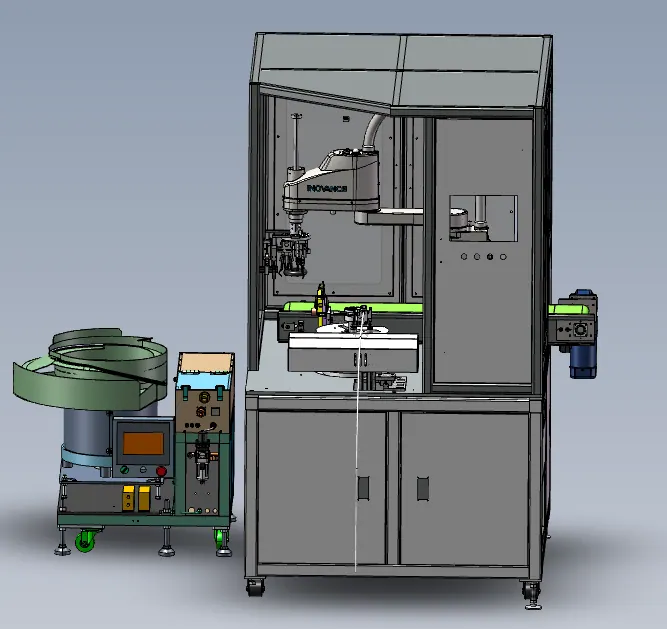
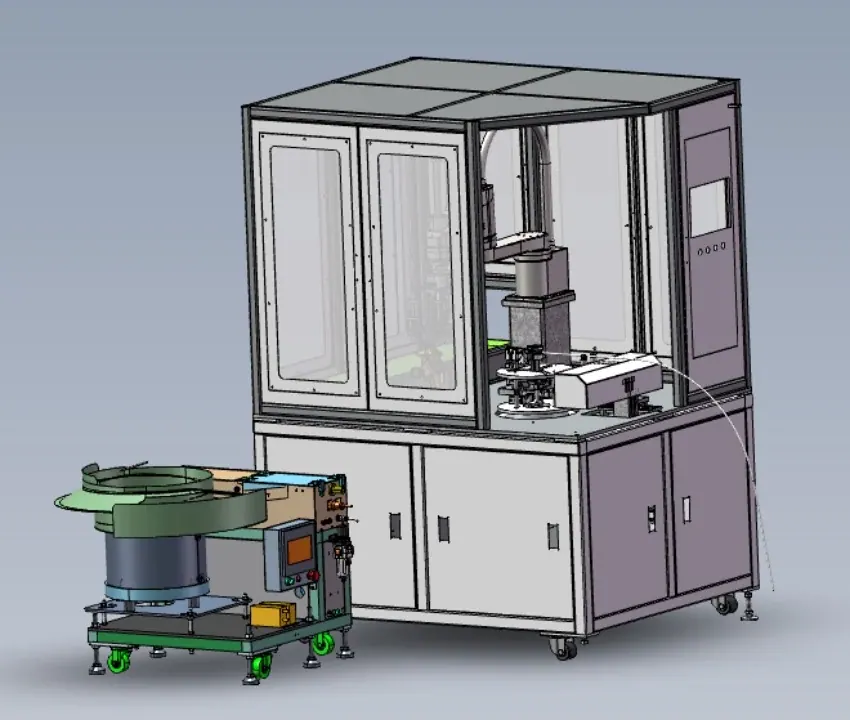
System configuration
Standalone or Integrated Winding Cell
The winding machine can operate independently or within a full assembly line for synchronized handling of coiling and cable tie fastening operations.
The winding machine can operate as a standalone unit or be integrated with automated assembly lines for coordinated production.
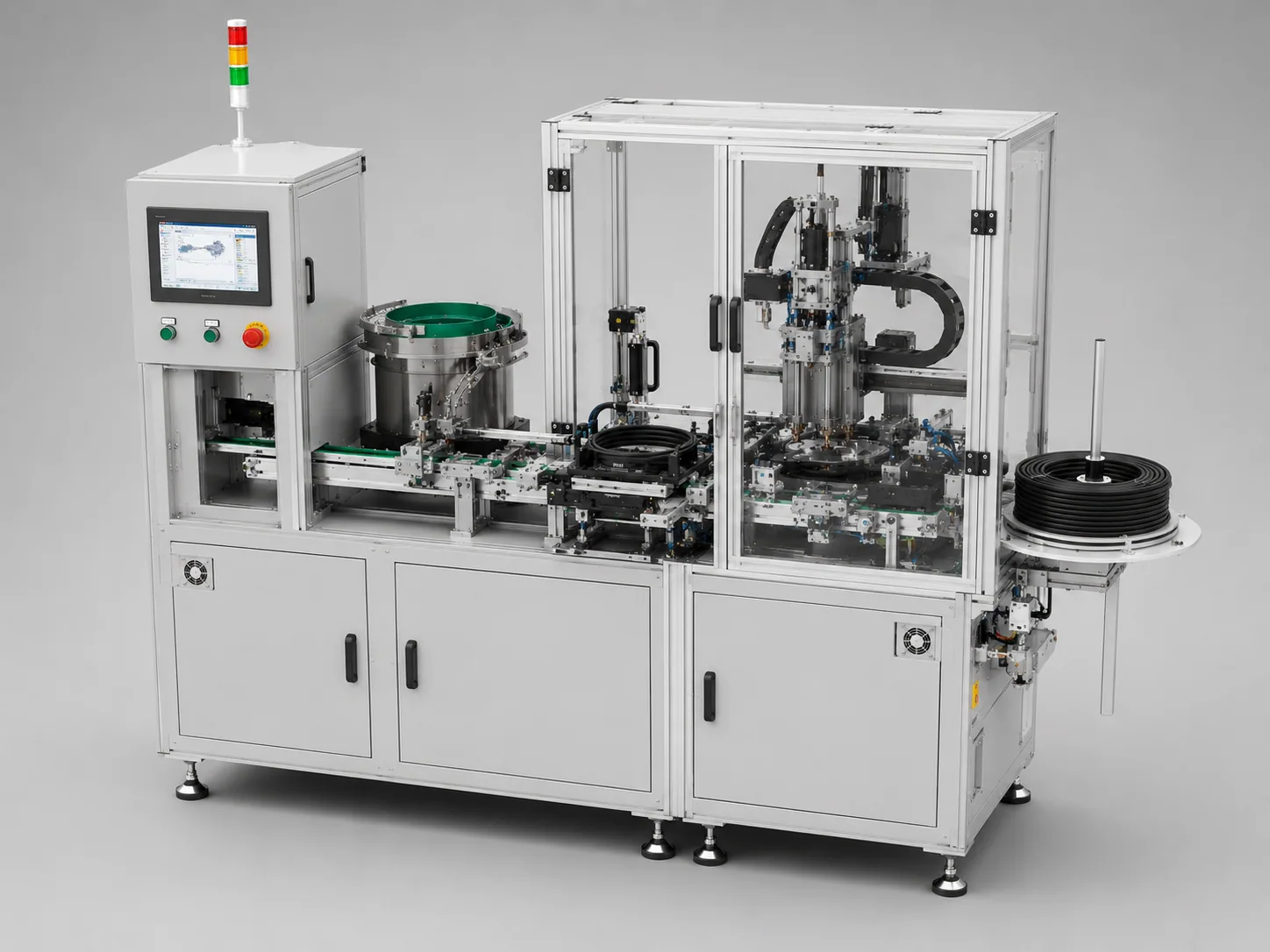
Key parts handled by the winding station, from finished junction boxes and PV cable leads to nylon cable ties and secured coiled output.
The winding machine can operate independently or within a full assembly line for synchronized handling of coiling and cable tie fastening operations.
Tie feed support for repeatable winding fixation.
Completed junction box body prepared for wire coiling.
Pre-assembled cable leads routed into the winding fixture.
Controlled cable loop formed before tie fastening.
Wound and tied product ready for transfer or packing.
Engineering decisions behind the winding cell architecture and the production environments where it performs best.
Combines wire coiling and nylon tie fastening in one compact process cell.
Fixture and feed path keep finished junction box cables aligned before winding starts.
Automated material fetching reduces manual handling variation during cycle start.
Can operate independently or connect with downstream packing and upstream assembly stations.
Consistent coil shape and tie position support stable transfer, packing and traceability.
Final cable handling station after electrical assembly and functional checks.
Standalone winding automation for factories replacing manual coiling and tying.
Suitable for finished junction box cable handling where fixture logic is standardized.
Creates controlled cable bundles before downstream transfer, boxing or palletizing.
Works as a terminal station in full PV junction box production automation.
Interactive stations showing nylon tie loading, manual feeding, mechanical arm material fetching, winding/tying and final unloading.
Ties prepared and staged for coordinated winding and fastening operations.
These references focus on end-of-line consistency, labor reduction, changeover planning and the quality controls that matter when winding finished cable assemblies.
Winding organizes the cable into a consistent loop for packing, transfer and downstream handling while reducing loose cable movement.
Cable length, cable memory, product orientation, winding path, tie position and fixture control all influence the finished coil shape.
A tie that is too loose may slip during packing, while excessive tightening can deform the cable or create unnecessary handling stress.
Cable length range, acceptable coil diameter, tie location, finished box geometry and packing requirements are the most useful starting points.
A controlled fixture and repeatable rotation path help make each finished bundle more consistent than hand winding, especially across shifts.
The handoff position, product orientation, buffer logic and reject handling should be reviewed so the winding cell does not become an end-of-line bottleneck.